Thoughts on what keeps pupils learning through a lesson, and why this might be difficult for the robot teachers of the future A few years ago, I wrote something about engagement, suggesting that saying pupils are โinvestedโ rather than just โengagedโ implies that they are more than just on task. The question โHow will you... Continue Reading →
Disciplinary literacy: reading a challenging text in the classroom
This post unpacks a typical approach to reading a challenging text, in this case in a geography lesson. It also describes a number of practices associated with strong โadaptive teachingโ. Reading challenging texts in the classroom It is notoriously difficult in secondary schools for strong disciplinary literacy practices to become established across the curriculum, for... Continue Reading →
Modelling and how to plan for it
The current focus on โadaptive teachingโ has meant that the craft (or art) of teacher modelling has rightly been foregrounded, as a crucial mechanism for making learning accessible. Interestingly, when I am asked after seeing a lesson to comment on how learning might have been more successful, modelling is probably the most common element I... Continue Reading →
Key learning questions โ an introduction
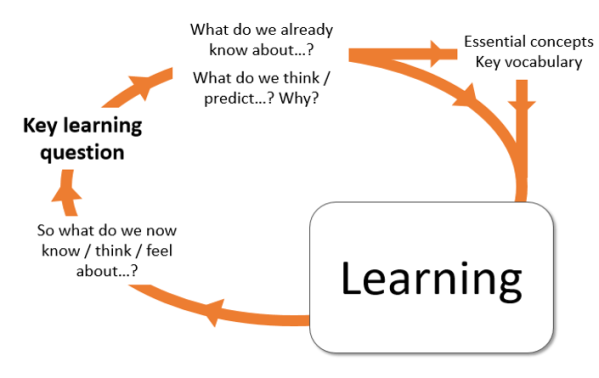
A โkey learning questionโ is simply a way of framing the learning in a lesson or across a sequence of lessons โ of setting the learning agenda for pupils. It is an alternative to the traditional โlearning objectiveโ, replacing a statement of what pupils will learn, or of what they will aim to learn, with... Continue Reading →
Resuming the curriculum, September 2020
Questions for subject leaders and teams Subject leaders and subject teams are already working hard on planning for September โ for what they will teach, in what order and in what way โ in order to meet the challenges of a return to full-time school. It will not be possible just to switch the curriculum... Continue Reading →
Some thoughts on ‘pace’
A notoriously unhelpful piece of lesson observation feedback is that there was insufficient โpaceโ. Of course, in discussion this might be teased out and made sense of, but sometimes it is left unclear, or (worse) it can reflect a misunderstanding of what the teacher was doing, or of how a subject works. The difficulty, of... Continue Reading →
Quick talk about texts
Short-burst pair or group talk activities which can be woven into reading lessons Inย other posts, I've suggested that the most effective whole-class reading sessions allow for seamless weaving together of whole-class discussion, individual thinking time and pair or small group talk. below are some examples of typical, short pair or group talk activities (30 seconds... Continue Reading →
Reading as writers; writing as readers: an account of a Year 5/6 teaching sequence
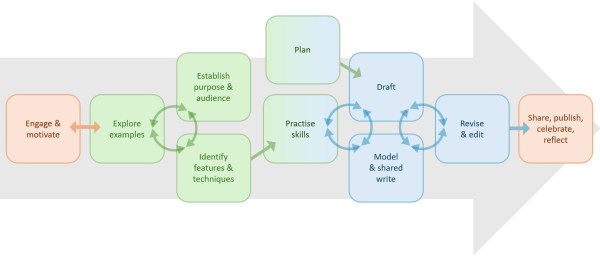
This is an example of an approach to a text, which is designed specifically to help all pupils to develop their writing of literary narrative without recourse to the โfeatures of descriptive writingโ or to checklists of literary devices. Over a series of sessions, it integrates whole-class reading practice with the planning and drafting of... Continue Reading →
Re-thinking โsuccess criteriaโ: a simple device to support pupilsโ writing
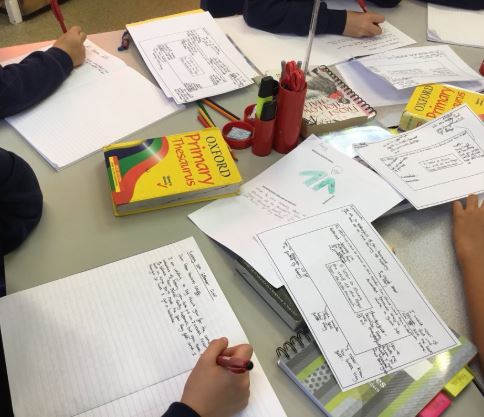
Colleagues and I have been working with primary schools to develop an alternative to listed โsuccess criteriaโ for writing, which we call โboxedโ or โexpanding success criteria' (or often just 'the rectangles thing.') It is very easy to adopt, and teachers have been finding that it can transform how writing is talked about and approached... Continue Reading →
Whole-class reading: a planning tool
See also Whole-class reading: an example lesson and a menu of approachesย ย andย Whole-class reading: another example lesson Recently, colleagues and I have been working hard with schools to develop whole-class reading practice which is both challenging and inclusive. This is a particularly current issue in primary schools, but is - of course - also pertinent to... Continue Reading →