‘Adaptive teaching’: what does it mean in practice?

Schools are working very hard at the moment to make sure that โ€˜adaptive teachingโ€™ is an established idea, and is a successful part of everyday practice. This post (based on work I have done with schools) offers one framework for reflecting on or auditing that practice. This has, in turn, emerged from discussions around what... Continue Reading →

Key learning questions โ€“ an introduction

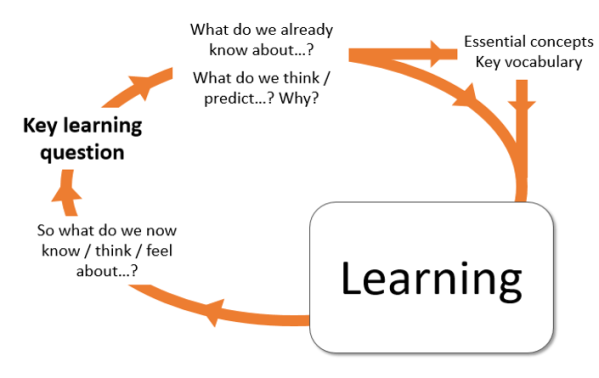
A โ€˜key learning questionโ€™ is simply a way of framing the learning in a lesson or across a sequence of lessons โ€“ of setting the learning agenda for pupils. It is an alternative to the traditional โ€˜learning objectiveโ€™, replacing a statement of what pupils will learn, or of what they will aim to learn, with... Continue Reading →

Re-thinking โ€˜success criteriaโ€™: a simple device to support pupilsโ€™ writing

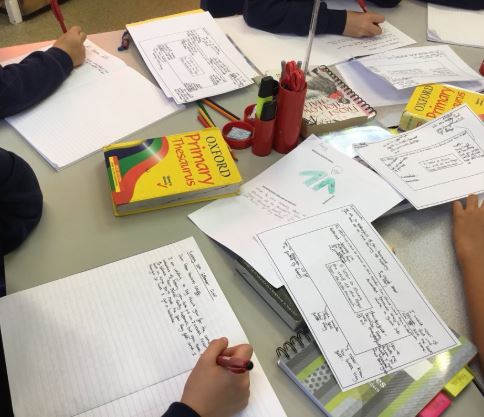
Colleagues and I have been working with primary schools to develop an alternative to listed โ€˜success criteriaโ€™ for writing, which we call โ€˜boxedโ€™ or โ€˜expanding success criteria' (or often just 'the rectangles thing.') It is very easy to adopt, and teachers have been finding that it can transform how writing is talked about and approached... Continue Reading →

Challenging responses: designing a successful teacher-led reading lesson

A reflection on some different ways to structure discussion of a text in the classroom. The example is from Key Stage 3, although the principles are applicable to any phase. The text below is one which we used to read with Key Stage 3 pupils at Parkside Community College, in Cambridge, when teaching about World... Continue Reading →

‘In this school, English is aboutโ€ฆ’

Practical tools for reflecting on the what, why and how of English teaching A friendโ€™s nephew, when in Year 8, remarked to him: โ€œI used to enjoy English, but all we do now is write PEE paragraphs.โ€ If this is a pupilโ€™s view (even an unfair one) of English in their school, then something has... Continue Reading →

Who is doing what in the classroom? A tool for planning and reflection

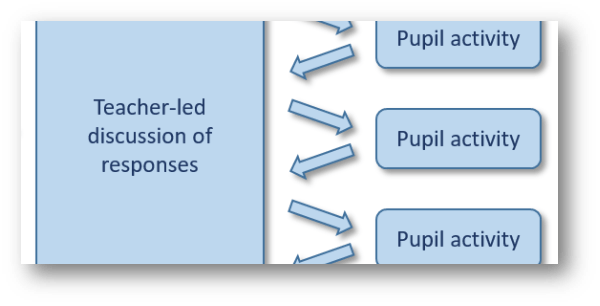
It is always risky to discuss something as complex as teaching and learning in terms of any sort of โ€˜modelโ€™. It is always reductive and probably wrong. However, at the moment I am finding it useful to think of classroom teaching working like this. (Click to enlarge) Based on well-rehearsed principles, this schematic might be... Continue Reading →

Differentiation: pitching high, not making easy

A short post about climbing frames: pitch high and support all pupils in reaching for that level. This is a photo of my two children at the โ€˜Yorkshire Dales Ice Cream Farmโ€™ (not โ€˜pick-your-ownโ€™, sadly) taken about three years ago. They are the oddly gnomic-looking child at the top of the slide and โ€“ typically... Continue Reading →

Post-Levels: tracking progress in English at Key Stage 3

Thoughts on how schools are assessing progress and attainment in English at Key Stage 3 This post is based very closely on an original article forย NATEโ€˜s Teaching English (Issue 8, Summer 2015) Post-levels, it has been left to schools to decide on how to track progress at Key Stage 3. A number of teaching schools […]

Developing critical readers: preparing students for GCSE English Language reading papers

Thoughts on how students are taught to writeย critically about texts in exams This post was originally an article forย NATEโ€˜s Teaching English (Issue 12, Autumn 2016) Preparing for the new English GCSEs has compelled English departments to put their Key Stage 4 curriculum through yet another revision. For many, this has been taken as an opportunity […]

Start a Blog at WordPress.com.

Up ↑