On ‘checking for understanding’ and feedback loops

A lot is being written and published at the moment on adaptive teaching, and particularly on how ‘checking for understanding’ happens in classrooms. It strikes me that some of the discourse risks overcomplicating what (if it is to be applied) needs to feel manageable and intuitive. I probably overcomplicated things a bit myself in this... Continue Reading →

Explaining in the classroom: the importance of relationship

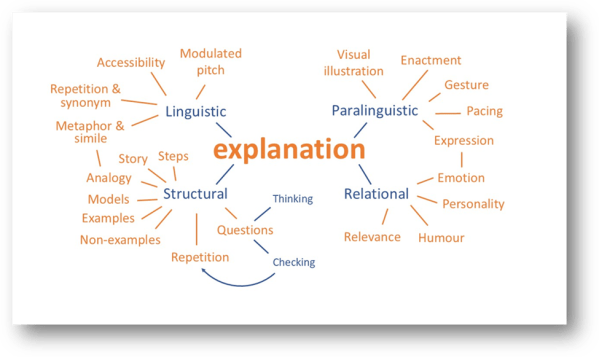
I see a lot of explaining happening in classrooms, and I did a lot of explaining as a teacher. It’s a key aspect of instruction, which has been much theorised and written about. For what it’s worth, this is how I see the anatomy of explanation – its mechanical elements and its hugely important (but... Continue Reading →

Teaching & learning: prescription versus autonomy

As schools develop their teaching and learning ‘strategies’, or ‘policies’, or ‘principles’, they have to grapple with the balancing of autonomy with consistency – of teacher or subject difference with common expectations. Speaking to the Confederation of School Trusts in 2024, Sir Kevin Collins painted a bleak picture of the more extreme prescriptiveness, which he... Continue Reading →

Exam readiness – a tool for reflecting on culture and practice

Recently, I have had a number of conversations with secondary school leaders about exam readiness. The last few years have a seen an important focus on curriculum and its implementation. But some dips in the 2023 results, as well as Ofsted’s announced emphasis on data, have led in many schools to a renewed, pragmatic focus... Continue Reading →

Start a Blog at WordPress.com.

Up ↑