Teaching & learning: prescription versus autonomy

As schools develop their teaching and learning โ€˜strategiesโ€™, or โ€˜policiesโ€™, or โ€˜principlesโ€™, they have to grapple with the balancing of autonomy with consistency โ€“ of teacher or subject difference with common expectations. Speaking to the Confederation of School Trusts in 2024, Sir Kevin Collins painted a bleak picture of the more extreme prescriptiveness, which he... Continue Reading →

Staying invested

Thoughts on what keeps pupils learning through a lesson, and why this might be difficult for the robot teachers of the future A few years ago, I wrote something about engagement, suggesting that saying pupils are โ€˜investedโ€™ rather than just โ€˜engagedโ€™ implies that they are more than just on task. The question โ€˜How will you... Continue Reading →

‘Adaptive teaching’: what does it mean in practice?

Schools are working very hard at the moment to make sure that โ€˜adaptive teachingโ€™ is an established idea, and is a successful part of everyday practice. This post (based on work I have done with schools) offers one framework for reflecting on or auditing that practice. This has, in turn, emerged from discussions around what... Continue Reading →

Disciplinary literacy: reading a challenging text in the classroom

This post unpacks a typical approach to reading a challenging text, in this case in a geography lesson. It also describes a number of practices associated with strong โ€˜adaptive teachingโ€™. Reading challenging texts in the classroom It is notoriously difficult in secondary schools for strong disciplinary literacy practices to become established across the curriculum, for... Continue Reading →

Modelling and how to plan for it

The current focus on โ€˜adaptive teachingโ€™ has meant that the craft (or art) of teacher modelling has rightly been foregrounded, as a crucial mechanism for making learning accessible. Interestingly, when I am asked after seeing a lesson to comment on how learning might have been more successful, modelling is probably the most common element I... Continue Reading →

Key learning questions โ€“ an introduction

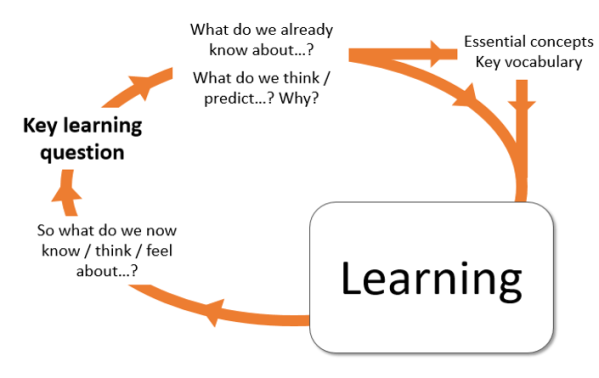
A โ€˜key learning questionโ€™ is simply a way of framing the learning in a lesson or across a sequence of lessons โ€“ of setting the learning agenda for pupils. It is an alternative to the traditional โ€˜learning objectiveโ€™, replacing a statement of what pupils will learn, or of what they will aim to learn, with... Continue Reading →

Some thoughts on ‘pace’

A notoriously unhelpful piece of lesson observation feedback is that there was insufficient โ€˜paceโ€™. Of course, in discussion this might be teased out and made sense of, but sometimes it is left unclear, or (worse) it can reflect a misunderstanding of what the teacher was doing, or of how a subject works. The difficulty, of... Continue Reading →

Making the investment

Reframing โ€˜engagementโ€™ in the classroom Any mention of โ€˜engagementโ€™ in the education Twittersphere or blogosphere will create a flurry of emotive debate. To many, it is now a dirty word, summoning up caricatures of content-free, gimmick-laden teaching, in which the aim is simply to engage so that learning somehow follows. In fact, there is a... Continue Reading →

Asking real questions in the classroom

One of the main ways in which teachers โ€˜giveโ€™ feedback to pupils is through follow-up questioning. This is sometimes the case in written feedback, but is particularly the case in oral feedback, as part of dynamic classroom teaching, in which feedback is folded into learning and is indistinguishable from the discussion andย exploration of ideas. It... Continue Reading →

Who is doing what in the classroom? A tool for planning and reflection

It is always risky to discuss something as complex as teaching and learning in terms of any sort of โ€˜modelโ€™. It is always reductive and probably wrong. However, at the moment I am finding it useful to think of classroom teaching working like this. (Click to enlarge) Based on well-rehearsed principles, this schematic might be... Continue Reading →

Start a Blog at WordPress.com.

Up ↑