Disciplinary literacy: โ€˜activeโ€™ reading in the classroom

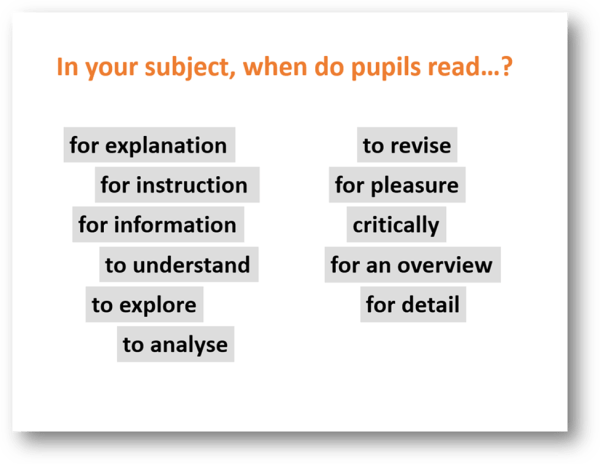
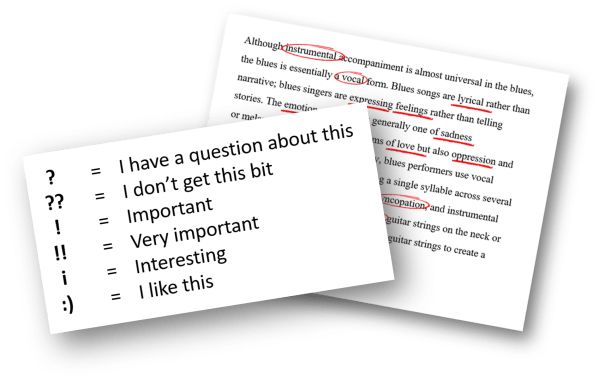
Some ways to make sure that students are thinking hard when they read challenging texts in the classroom In a recent post, I explored ways in which a teacher (in this case of geography) might successfully manage studentsโ€™ classroom encounter with a challenging text, so that it was made accessible to all students, who would... Continue Reading →

Disciplinary literacy: reading a challenging text in the classroom

This post unpacks a typical approach to reading a challenging text, in this case in a geography lesson. It also describes a number of practices associated with strong โ€˜adaptive teachingโ€™. Reading challenging texts in the classroom It is notoriously difficult in secondary schools for strong disciplinary literacy practices to become established across the curriculum, for... Continue Reading →

Flipping Batman

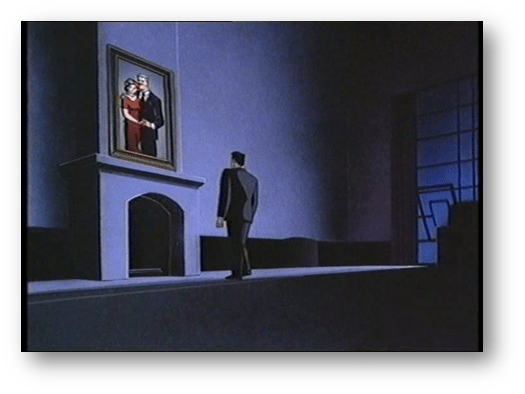
A reflection on a sequence of lessons, from the teacherโ€™s and from the learnerโ€™s perspectives. By James Durran and Joe Minden. From September 2021, Joe will be teaching English at Cardinal Newman Catholic School in Brighton. This blog is built around a piece of writing which he wrote in 2003, when he was a pupil... Continue Reading →

Lost queens and dodos: some reflections on knowledge, comprehension and how we teach reading

Reading is built on knowledge. But itโ€™s a bit more complicated than that. This post was co-written with Barbara Bleiman (@BarbaraBleiman), and is also published on the English and Media Centre blog. In 2016, the passages on the new-look Key Stage 2 โ€˜Readingโ€™ test caused some controversy, seen by many as being too demanding for... Continue Reading →

The power of exploratory writing

The piece below was written many years ago by a Year 9 pupil, Kanika, for a colleague of mine (@craigbmorrison) at Parkside Community College, Cambridge. It illustrates, I think, some features of what might be termed โ€˜exploratoryโ€™ writing โ€“ developing response, understanding and expression without recourse to P.E.E or P.E.T.A.L. or other formulae, and without... Continue Reading →

Quick talk about texts

Short-burst pair or group talk activities which can be woven into reading lessons Inย other posts, I've suggested that the most effective whole-class reading sessions allow for seamless weaving together of whole-class discussion, individual thinking time and pair or small group talk. below are some examples of typical, short pair or group talk activities (30 seconds... Continue Reading →

Reading as writers; writing as readers: an account of a Year 5/6 teaching sequence

This is an example of an approach to a text, which is designed specifically to help all pupils to develop their writing of literary narrative without recourse to the โ€˜features of descriptive writingโ€™ or to checklists of literary devices. Over a series of sessions, it integrates whole-class reading practice with the planning and drafting of... Continue Reading →

Whole-class reading: a planning tool

See also Whole-class reading: an example lesson and a menu of approachesย ย andย Whole-class reading: another example lesson Recently, colleagues and I have been working hard with schools to develop whole-class reading practice which is both challenging and inclusive. This is a particularly current issue in primary schools, but is - of course - also pertinent to... Continue Reading →

Whole-class reading: another example lesson

See also: Whole-class reading: a planning tool A description of a recent whole-class reading lesson, with commentary This is a description of another successful whole-class reading lesson which I taught recently to Year 4 and Year 5 classes (although the approaches are applicable to other phases.) It is a follow-up to a post last year... Continue Reading →

From page to screen and back again: teaching Shakespeare through film and film through Shakespeare

This blog post was originally an article, written in 2003 with Craig Morrison for the NATE magazine English, Drama, Media, when we both taught at Parkside Community College in Cambridge.ย  The practice it describes has since been developed further, but it is still all just as applicable now as it was fourteen years ago, as... Continue Reading →

Start a Blog at WordPress.com.

Up ↑