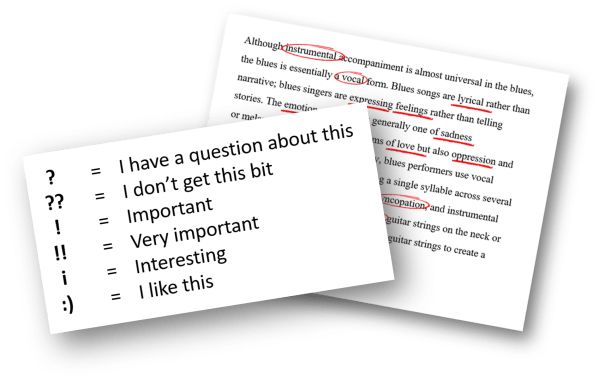
Some ways to make sure that students are thinking hard when they read challenging texts in the classroom In a recent post, I explored ways in which a teacher (in this case of geography) might successfully manage students’ classroom encounter with a challenging text, so that it was made accessible to all students, who would... Continue Reading →
Staying invested
Thoughts on what keeps pupils learning through a lesson, and why this might be difficult for the robot teachers of the future A few years ago, I wrote something about engagement, suggesting that saying pupils are ‘invested’ rather than just ‘engaged’ implies that they are more than just on task. The question ‘How will you... Continue Reading →
‘Adaptive teaching’: what does it mean in practice?
Schools are working very hard at the moment to make sure that ‘adaptive teaching’ is an established idea, and is a successful part of everyday practice. This post (based on work I have done with schools) offers one framework for reflecting on or auditing that practice. This has, in turn, emerged from discussions around what... Continue Reading →
Disciplinary literacy: reading a challenging text in the classroom
This post unpacks a typical approach to reading a challenging text, in this case in a geography lesson. It also describes a number of practices associated with strong ‘adaptive teaching’. Reading challenging texts in the classroom It is notoriously difficult in secondary schools for strong disciplinary literacy practices to become established across the curriculum, for... Continue Reading →
Modelling and how to plan for it
The current focus on ‘adaptive teaching’ has meant that the craft (or art) of teacher modelling has rightly been foregrounded, as a crucial mechanism for making learning accessible. Interestingly, when I am asked after seeing a lesson to comment on how learning might have been more successful, modelling is probably the most common element I... Continue Reading →