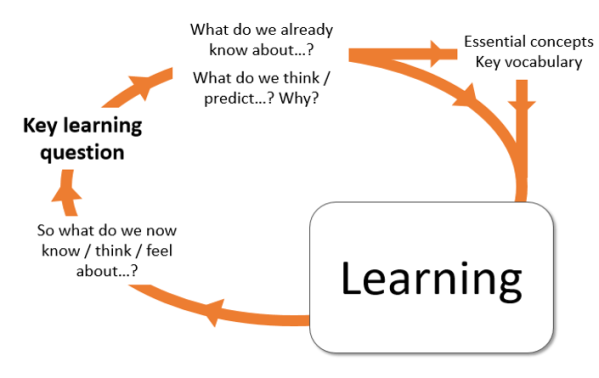
A โkey learning questionโ is simply a way of framing the learning in a lesson or across a sequence of lessons โ of setting the learning agenda for pupils. It is an alternative to the traditional โlearning objectiveโ, replacing a statement of what pupils will learn, or of what they will aim to learn, with... Continue Reading →
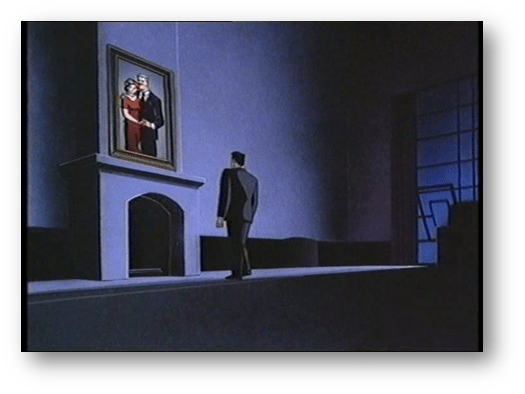
Flipping Batman
A reflection on a sequence of lessons, from the teacherโs and from the learnerโs perspectives. By James Durran and Joe Minden. From September 2021, Joe will be teaching English at Cardinal Newman Catholic School in Brighton. This blog is built around a piece of writing which he wrote in 2003, when he was a pupil... Continue Reading →
Lost queens and dodos: some reflections on knowledge, comprehension and how we teach reading
Reading is built on knowledge. But itโs a bit more complicated than that. This post was co-written with Barbara Bleiman (@BarbaraBleiman), and is also published on the English and Media Centre blog. In 2016, the passages on the new-look Key Stage 2 โReadingโ test caused some controversy, seen by many as being too demanding for... Continue Reading →
Resuming the curriculum, September 2020
Questions for subject leaders and teams Subject leaders and subject teams are already working hard on planning for September โ for what they will teach, in what order and in what way โ in order to meet the challenges of a return to full-time school. It will not be possible just to switch the curriculum... Continue Reading →
The power of exploratory writing
The piece below was written many years ago by a Year 9 pupil, Kanika, for a colleague of mine (@craigbmorrison) at Parkside Community College, Cambridge. It illustrates, I think, some features of what might be termed โexploratoryโ writing โ developing response, understanding and expression without recourse to P.E.E or P.E.T.A.L. or other formulae, and without... Continue Reading →
Ready to listen
A brief post on getting pupils to pay attention Pupils do a lot of listening in classrooms โ to explanations, information, narratives, arguments, model answers, feedback, dialogues, other pupilsโ contributions and interactions, instructions, advice or guidance, and so on. Listening as behaviour Interestingly, listening is often framed as simply something which pupils are either doing... Continue Reading →
Teaching talk
Classroom strategies for the explicit teaching of spoken expression When we think about how to develop pupilsโ talk in the classroom, it is natural to focus on the โopportunitiesโ we're providing for pupils to practise speaking. We also know that developing vocabulary and subject knowledge, the raw material for talk, is key. These are essential,... Continue Reading →
Some thoughts on ‘pace’
A notoriously unhelpful piece of lesson observation feedback is that there was insufficient โpaceโ. Of course, in discussion this might be teased out and made sense of, but sometimes it is left unclear, or (worse) it can reflect a misunderstanding of what the teacher was doing, or of how a subject works. The difficulty, of... Continue Reading →
Quick talk about texts
Short-burst pair or group talk activities which can be woven into reading lessons Inย other posts, I've suggested that the most effective whole-class reading sessions allow for seamless weaving together of whole-class discussion, individual thinking time and pair or small group talk. below are some examples of typical, short pair or group talk activities (30 seconds... Continue Reading →
Reading as writers; writing as readers: an account of a Year 5/6 teaching sequence
This is an example of an approach to a text, which is designed specifically to help all pupils to develop their writing of literary narrative without recourse to the โfeatures of descriptive writingโ or to checklists of literary devices. Over a series of sessions, it integrates whole-class reading practice with the planning and drafting of... Continue Reading →