Teaching & learning: prescription versus autonomy

As schools develop their teaching and learning โ€˜strategiesโ€™, or โ€˜policiesโ€™, or โ€˜principlesโ€™, they have to grapple with the balancing of autonomy with consistency โ€“ of teacher or subject difference with common expectations. Speaking to the Confederation of School Trusts in 2024, Sir Kevin Collins painted a bleak picture of the more extreme prescriptiveness, which he... Continue Reading →

Disciplinary literacy: โ€˜activeโ€™ reading in the classroom

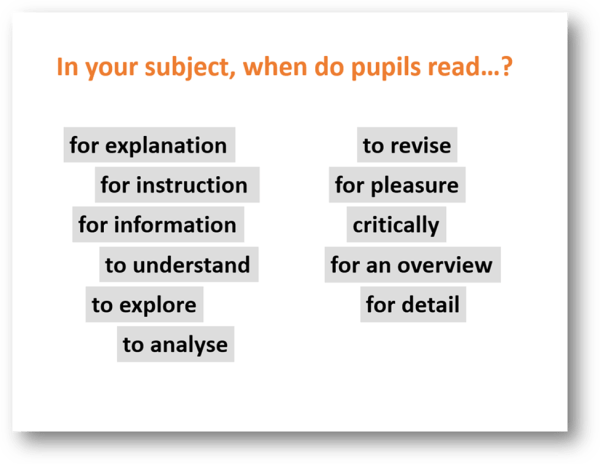
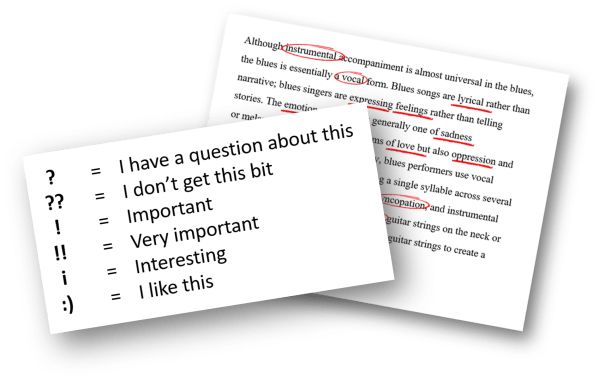
Some ways to make sure that students are thinking hard when they read challenging texts in the classroom In a recent post, I explored ways in which a teacher (in this case of geography) might successfully manage studentsโ€™ classroom encounter with a challenging text, so that it was made accessible to all students, who would... Continue Reading →

Staying invested

Thoughts on what keeps pupils learning through a lesson, and why this might be difficult for the robot teachers of the future A few years ago, I wrote something about engagement, suggesting that saying pupils are โ€˜investedโ€™ rather than just โ€˜engagedโ€™ implies that they are more than just on task. The question โ€˜How will you... Continue Reading →

‘Adaptive teaching’: what does it mean in practice?

Schools are working very hard at the moment to make sure that โ€˜adaptive teachingโ€™ is an established idea, and is a successful part of everyday practice. This post (based on work I have done with schools) offers one framework for reflecting on or auditing that practice. This has, in turn, emerged from discussions around what... Continue Reading →

Disciplinary literacy: reading a challenging text in the classroom

This post unpacks a typical approach to reading a challenging text, in this case in a geography lesson. It also describes a number of practices associated with strong โ€˜adaptive teachingโ€™. Reading challenging texts in the classroom It is notoriously difficult in secondary schools for strong disciplinary literacy practices to become established across the curriculum, for... Continue Reading →

Modelling and how to plan for it

The current focus on โ€˜adaptive teachingโ€™ has meant that the craft (or art) of teacher modelling has rightly been foregrounded, as a crucial mechanism for making learning accessible. Interestingly, when I am asked after seeing a lesson to comment on how learning might have been more successful, modelling is probably the most common element I... Continue Reading →

Exam readiness โ€“ a tool for reflecting on culture and practice

Recently, I have had a number of conversations with secondary school leaders about exam readiness. The last few years have a seen an important focus on curriculum and its implementation. But some dips in the 2023 results, as well as Ofstedโ€™s announced emphasis on data, have led in many schools to a renewed, pragmatic focus... Continue Reading →

Key learning questions โ€“ an introduction

A โ€˜key learning questionโ€™ is simply a way of framing the learning in a lesson or across a sequence of lessons โ€“ of setting the learning agenda for pupils. It is an alternative to the traditional โ€˜learning objectiveโ€™, replacing a statement of what pupils will learn, or of what they will aim to learn, with... Continue Reading →

Flipping Batman

A reflection on a sequence of lessons, from the teacherโ€™s and from the learnerโ€™s perspectives. By James Durran and Joe Minden. From September 2021, Joe will be teaching English at Cardinal Newman Catholic School in Brighton. This blog is built around a piece of writing which he wrote in 2003, when he was a pupil... Continue Reading →

Lost queens and dodos: some reflections on knowledge, comprehension and how we teach reading

Reading is built on knowledge. But itโ€™s a bit more complicated than that. This post was co-written with Barbara Bleiman (@BarbaraBleiman), and is also published on the English and Media Centre blog. In 2016, the passages on the new-look Key Stage 2 โ€˜Readingโ€™ test caused some controversy, seen by many as being too demanding for... Continue Reading →

Start a Blog at WordPress.com.

Up ↑