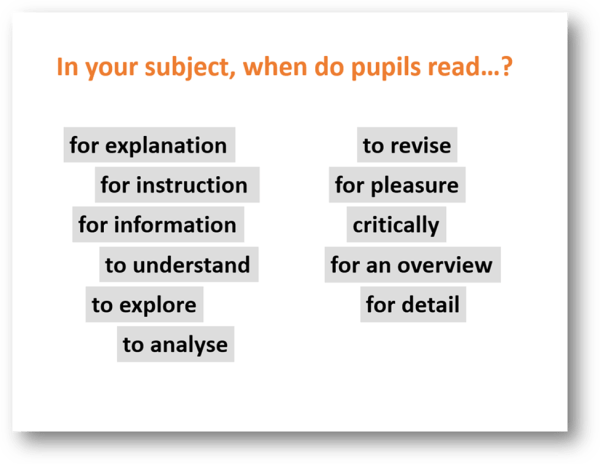
‘Reading for pleasure’ is suddenly a topic of lively and interesting debate. What is it? What should ‘it’ be called? What is its value? Where should it sit within education? The discussion is focused on the various forms of volitional reading which pupils do on their own. But what about the reading which isn’t volitional,... Continue Reading →
On ‘checking for understanding’ and feedback loops
A lot is being written and published at the moment on adaptive teaching, and particularly on how ‘checking for understanding’ happens in classrooms. It strikes me that some of the discourse risks overcomplicating what (if it is to be applied) needs to feel manageable and intuitive. I probably overcomplicated things a bit myself in this... Continue Reading →
Explaining in the classroom: the importance of relationship
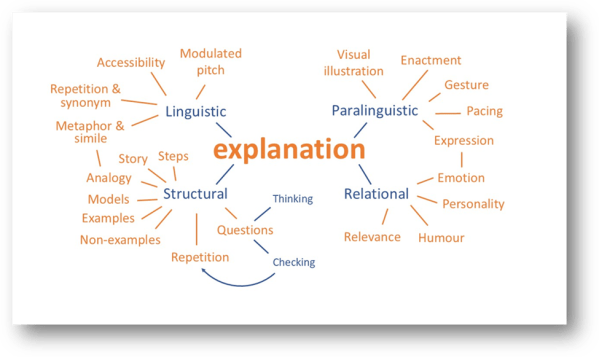
I see a lot of explaining happening in classrooms, and I did a lot of explaining as a teacher. It’s a key aspect of instruction, which has been much theorised and written about. For what it’s worth, this is how I see the anatomy of explanation – its mechanical elements and its hugely important (but... Continue Reading →